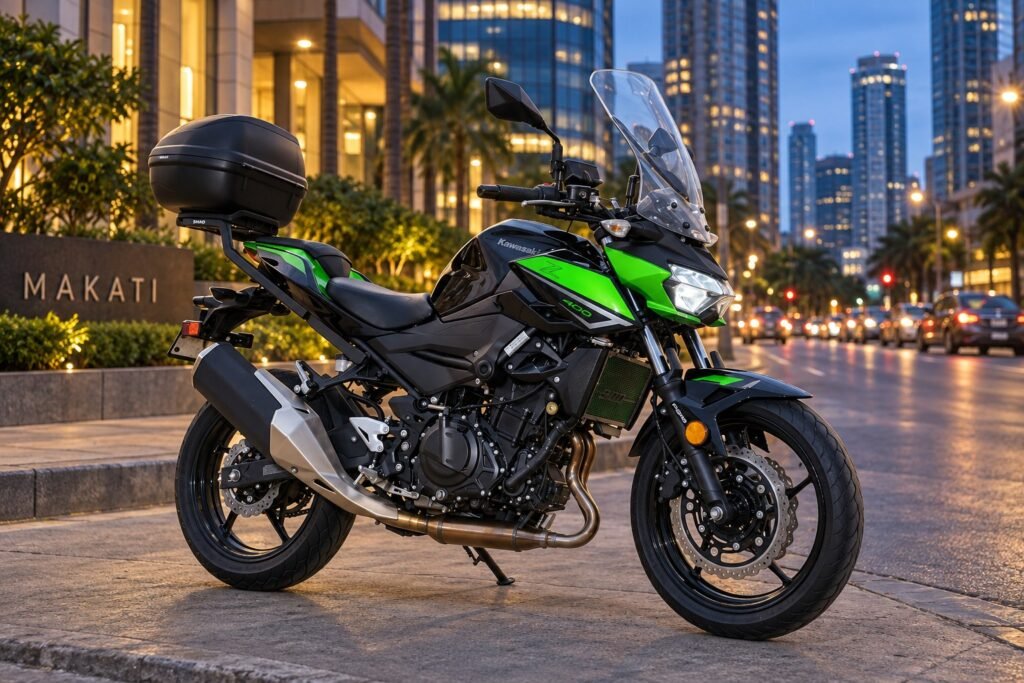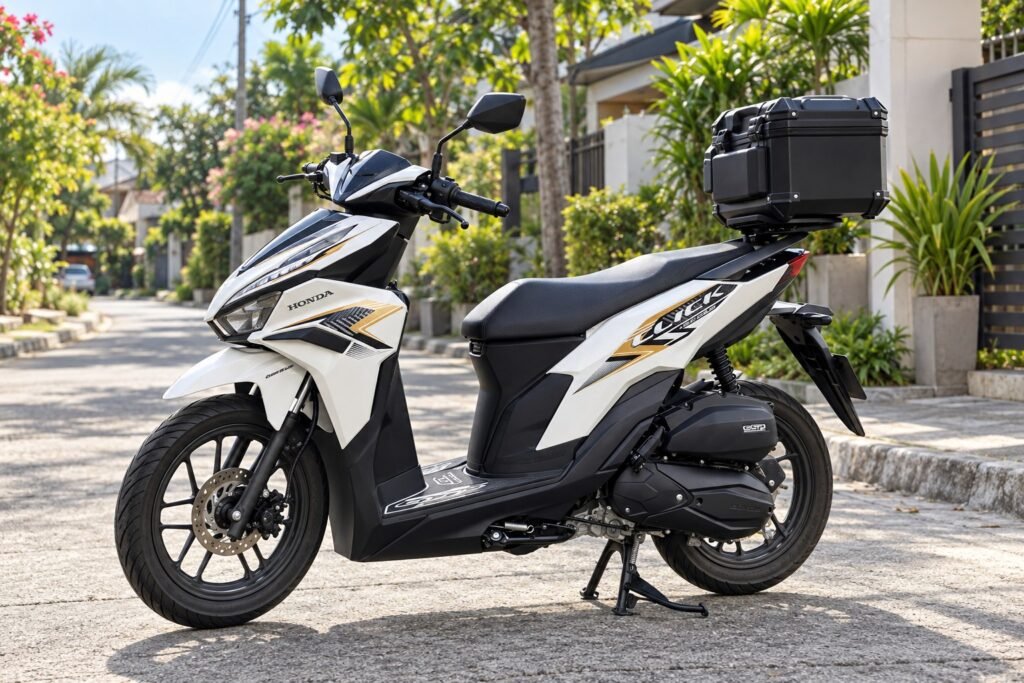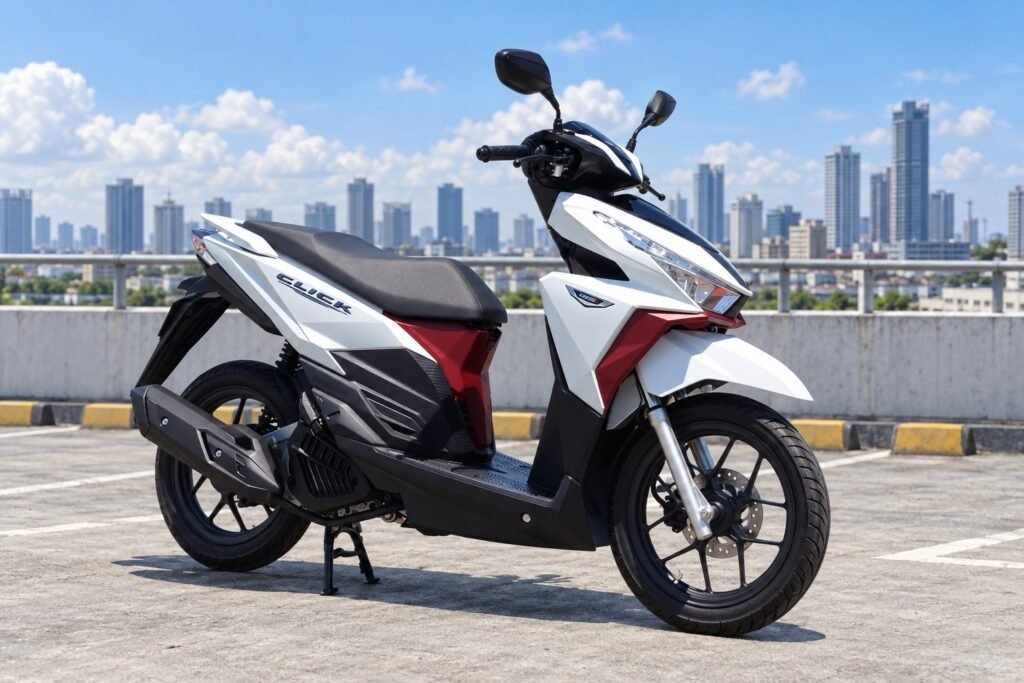
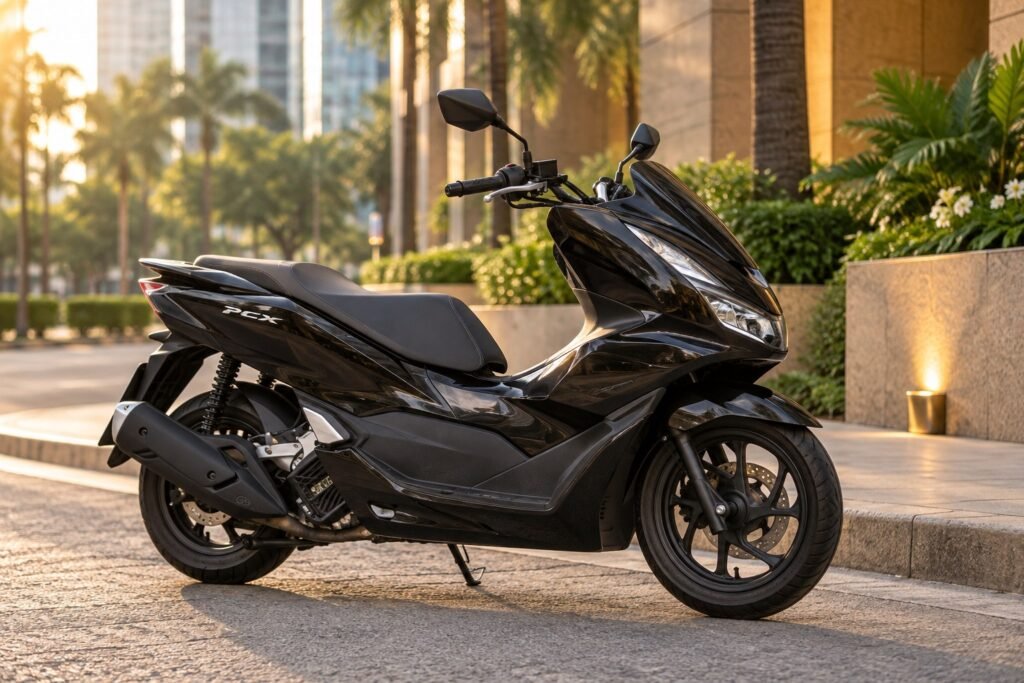
The Honda ADV 160 costs ₱167,400 and the PCX 160 ₱134,000 in the Philippines, and they share the same 157cc engine, the same 8.1-liter tank and the same 30-liter luggage box. The ₱33,400 between them buys chassis, not power. The ADV sits on 165 mm of ground clearance against the PCX’s 134 mm, has sub-tank rear shocks and comes with ABS as standard. The PCX has a lower 764 mm seat, a smoother ride on good pavement, and needs the ₱156,000 RoadSync trim to get ABS. Flooded streets and broken roads favor the ADV; a paved commute favors the PCX. Both rent for ₱1,200 a day at Rent2Ride Manila, which is the cheapest way to settle it before you commit.
ADV 160 vs PCX 160 price in the Philippines (2026)
| Honda ADV 160 | Honda PCX 160 | |
|---|---|---|
| Base variant | ABS Type — ₱167,400 | Standard — ₱134,000 |
| Top variant | RoadSync Type — ₱174,900 | RoadSync — ₱156,000 |
| Older figure you will still see | ₱166,900 (before the January 2026 refresh) | ₱133,400 / ₱154,900 (2025 launch prices) |
| Cheapest version with ABS | ₱167,400 | ₱156,000 |
| Rent2Ride daily rate | ₱1,200 (ADV 160) · ₱1,700 (ADV 160 Modified) | ₱1,200 (PCX Modified) |
The ADV prices come from Honda’s January 2026 refresh, which added a RoadSync version for the first time; retail sales started on 2 February. The ADV had sat at ₱166,900 before that, and aggregator sites still show it. Mechanically nothing changed. The refresh brought new fairing styling, new colors and the RoadSync option.
The PCX prices are Honda Philippines’ own current SRPs, from its PCX160 promo page for 21 October to 31 December 2026. During that promo Honda takes ₱2,000 off the Standard and ₱1,500 off the RoadSync, so the shelf price is ₱132,000 and ₱154,500. When the all-new PCX160 launched in September 2025, it was ₱133,400 and ₱154,900, the figures most listing sites, and our own PCX price guide, still carry.
How you pair the trims changes the gap. Base against base, the ADV costs ₱33,400 more. RoadSync against RoadSync, ₱18,900 more. ABS against ABS, the PCX RoadSync against the ADV ABS Type, it is ₱11,400. If ABS matters to you, and on wet Philippine roads it should, that last figure is the honest one.
What you are actually paying for
Most comparisons treat these as two different scooters. Honda’s own spec sheets show they are closer than that. Both use the same 157cc four-valve, liquid-cooled eSP+ engine making 11.8 kW and 14.7 Nm. Both carry an 8.1-liter tank. Both have a 30-liter luggage box under the seat. They weigh within a kilogram of each other. Range, storage and performance are not reasons to pick one over the other.
The money buys three things. Ground clearance: 165 mm on the ADV, 134 mm on the PCX, a 31 mm difference that is the whole point of the ADV. Suspension: the ADV’s rear shocks have sub-tanks on every version, while the PCX gets sub-tank shocks only on the RoadSync. And standard ABS: every ADV has it, while the PCX Standard uses a combined braking system that links front and rear discs but does not stop the wheels locking. The ADV also comes with an adjustable windshield.
ADV 160 vs PCX 160 specifications
| Honda ADV 160 | Honda PCX 160 | |
|---|---|---|
| Engine | 157cc single, 4-valve, liquid-cooled, eSP+ | 157cc single, 4-valve, liquid-cooled, eSP+ |
| Power / torque | 11.8 kW · 14.7 Nm | 11.8 kW · 14.7 Nm |
| Seat height | 780 mm | 764 mm |
| Ground clearance | 165 mm | 134 mm |
| Curb weight | 133 kg | 132 kg (Standard) · 133 kg (RoadSync) |
| Fuel tank | 8.1 liters | 8.1 liters |
| Luggage box | 30 liters | 30 liters |
| Claimed economy (WMTC) | 45.0 km/L | 46.0 km/L |
| Brakes | Discs front and rear, ABS on both variants | Discs front and rear; CBS on Standard, ABS on RoadSync |
| Rear suspension | Twin shocks with sub-tanks | Twin shocks; sub-tanks on RoadSync |
| 5-inch TFT display | RoadSync only | RoadSync only |
| Expressway-legal | No (157cc) | No (157cc) |
| Rent2Ride daily rate | ₱1,200 · ₱1,700 (Modified) | ₱1,200 (Modified) |
Listing sites quote the PCX at 156cc, 15 Nm and 30.4 liters of storage, and our earlier PCX guide used those figures. Honda Philippines’ own specification data says 157cc, 14.7 Nm and 30 liters, and that is what we use here. Honda does not publish suspension travel for either bike, so we do not print it.
Ground clearance and flooding
The 31 mm gap is the one number that should decide this for most Metro Manila riders. Side streets in much of the city flood predictably every wet season. Every extra millimeter between the road and the exhaust, the underbody and the engine’s intake is margin on a flooded street, and the ADV has more of it than any scooter in its class that we rent.
Be realistic about what that buys. Extra clearance raises the floor; it does not make either scooter safe to ride through deep water. If water is high enough to reach the bodywork on an ADV, the right move on either bike is to wait or find another route. What the ADV does buy is margin: over speed humps, potholes, broken patches and the shallow standing water that collects after every downpour.
If your route is paved and dry most of the year, that advantage is one you pay ₱33,400 for and rarely use.
Comfort, rough roads and the city commute
The PCX is the calmer scooter. Its lower seat makes stops and slow-speed maneuvering easier, the floorboard leaves room to move your feet, and on decent pavement it is composed and quiet. It is set up to remove drama, and over a long commute that is worth more than it sounds.
The ADV sits higher and more upright, which gives a better view over traffic and suits taller riders. The suspension is built to absorb broken surfaces rather than to glide over smooth ones. On a rough provincial road or a cratered barangay shortcut it is the more comfortable of the two; on a freshly paved road the difference shrinks.
The 780 mm seat is the ADV’s most common complaint from shorter riders. At 764 mm the PCX is the most accessible of the popular 155cc–160cc scooters we cover. If you are around 5′4″ or shorter, sit on both before you decide.
Who each one suits
Buy the ADV 160 if your daily route floods, includes unpaved or broken stretches, or you ride regularly into the provinces on roads you cannot predict. It also suits taller riders and anyone who wants ABS without paying for RoadSync. It suits you less if you are short, if your riding is entirely on good pavement, or if ₱33,400 matters more than clearance you will not use.
Buy the PCX 160 if you commute on paved roads, carry things (you get the same 30-liter box for less), or want the lower seat and the smoother ride. Take the RoadSync if you want ABS and traction control; the Standard has neither. It suits you less if your street becomes a canal every July.
Cross-shopping Yamahas too? The NMAX is the PCX’s closest rival, and our NMAX vs Aerox comparison covers that side of the market.
The verdict
Same engine, same tank, same storage, so choose by road surface and by budget. If your roads flood or break up, the ADV 160 earns its ₱167,400 and the standard ABS is a bonus. If they do not, the PCX 160 is the better-value scooter, and the ₱156,000 RoadSync is the version to buy if you want ABS. Neither will take you onto an expressway: DOTC Department Order 2007-38 sets a 400cc minimum, and both are 157cc. Our guide to motorcycle expressway rules explains what qualifies.
Running costs
Same engine, near-identical running costs: Honda claims 45.0 km/L for the ADV and 46.0 km/L for the PCX on the WMTC test cycle. Budget for annual LTO registration, insurance beyond the TPL minimum, oil changes and CVT belt and roller service. We do not print a peso-per-liter fuel figure because Philippine pump prices have moved too much through 2026 for one to stay accurate.
Rent both before you commit
Rent2Ride Manila rents the Honda ADV 160 for ₱1,200 a day, the ADV 160 Modified for ₱1,700 a day and the Honda PCX Modified for ₱1,200 a day. A day on each of the standard-rate bikes costs ₱2,400, under 8% of the gap between the two base prices. Every rental includes one helmet, a phone holder, 250 km of mileage per day and TPL insurance, with same-to-same fuel. The refundable deposit is ₱5,000 for the ADVs and ₱3,000 for the PCX.
Know what you are testing. Our ADVs are 2024 models, so they have the same engine and chassis as the 2026 bike but not the RoadSync display. Our PCX is a modified, previous-generation unit fitted with a lockable top box, not a showroom-stock 2025 PCX. Both will tell you how the seat height, riding position and suspension feel on your own route. Neither will tell you about the new RoadSync screens. Our ADV 160 price guide has more on the ADV on its own.
We are open daily from 6:00 AM to 11:00 PM at Stall No. 9, Washington Street corner Urban Avenue, Makati, and on WhatsApp at +63 960 245 4398. You need a valid driver’s license that covers motorcycles and two government-issued IDs to surrender at pickup. Under RA 4136, visiting riders can use a home-country license for up to 90 days from arrival; if it is in English, an International Driving Permit is not legally required. See our IDP guide, the rental requirements page and the full fleet for availability.
Frequently asked questions
Which is better, the ADV 160 or the PCX 160?
It depends on your roads. They share the same 157cc engine, 8.1-liter tank and 30-liter luggage box. The ADV adds 31 mm of ground clearance, sub-tank rear shocks and standard ABS for ₱33,400 more. Flooded or broken roads favor the ADV; a paved commute and a tighter budget favor the PCX.
How much are the ADV 160 and PCX 160 in 2026?
ADV 160 ABS Type ₱167,400 and RoadSync Type ₱174,900, following Honda’s January 2026 refresh. PCX 160 Standard ₱134,000 and RoadSync ₱156,000, per Honda Philippines’ current promo page. Older listings showing ₱166,900 for the ADV or ₱133,400 and ₱154,900 for the PCX are out of date.
Do the ADV 160 and PCX 160 have the same engine?
Yes. Honda Philippines lists both with a 157cc four-valve, liquid-cooled eSP+ engine making 11.8 kW at 8,500 rpm and 14.7 Nm at 6,500 rpm. Claimed economy is 45.0 km/L for the ADV and 46.0 km/L for the PCX.
Does the PCX 160 have ABS?
Only the RoadSync version, at ₱156,000, which also adds Honda Selectable Torque Control and a 5-inch TFT display. The ₱134,000 Standard has a combined braking system on front and rear discs, which is not ABS. Every ADV 160 has ABS.
Can the ADV 160 or PCX 160 use the expressway?
No. Both are 157cc, and DOTC Department Order 2007-38 sets a 400cc minimum for motorcycles on tolled expressways, which the Toll Regulatory Board applies exactly.
Can I rent an ADV 160 and a PCX 160 in Manila?
Yes. Rent2Ride Manila in Makati rents the ADV 160 at ₱1,200 a day, the ADV 160 Modified at ₱1,700 and a modified PCX at ₱1,200, each with one helmet, a phone holder, 250 km of daily mileage and TPL insurance. Deposits are ₱5,000 for the ADVs and ₱3,000 for the PCX.
Sources
ADV 160 prices, weight, ABS and windshield from Top Gear Philippines, 19 January 2026, and Daily Tribune, 25 January 2026. ADV seat height, ground clearance, engine output, tank, luggage box, economy and suspension from Honda Philippines, 19 January 2026. Current PCX 160 SRPs from Honda Philippines’ PCX160 promo page (promo period 21 October to 31 December 2026); PCX seat height, ground clearance, weight, tank and economy from Honda Philippines’ PCX160 specification data. PCX launch prices, variant equipment and luggage box from Daily Tribune, 15 September 2025, and Honda’s release as published by Wheels.ph, 3 September 2025. Expressway displacement rule from Top Gear Philippines’ report on the TRB directive, 18 August 2018. All verified 27 October 2026. Rental rates, deposits and inclusions from our own live pricing on the same date.