Yes. A foreign visitor can legally ride a motorcycle in the Philippines for up to 90 days from arrival, on a valid home-country driver’s license that covers motorcycles. That permission comes from Section 21 of Republic Act No. 4136, the Land Transportation and Traffic Code. If your license is not in English you also need an official English translation, which an International Driving Permit provides. After 90 days the foreign license stops counting and you need a Philippine license from the LTO. On the road, the rules visitors are most often caught out by are the helmet law, carrying the license itself, and taking a small bike onto an expressway. Renting is the simplest way to ride legally on a short stay: scooters at Rent2Ride Manila start at ₱525 a day.
The short version
| Can a tourist ride? | Yes, on a valid license from your home country |
|---|---|
| For how long? | Up to 90 days, counted from your date of arrival |
| Which license? | One that covers motorcycles. A car-only license does not. |
| License not in English? | Carry an official English translation or an International Driving Permit with it |
| Staying past 90 days? | Convert to a Philippine license at the LTO |
| Helmets | Compulsory for rider and passenger, on every road |
| Expressways | Only motorcycles of 400cc and above |
What the law actually says
Section 21 of RA 4136 is short, and the whole answer is in it:
“Bona fide tourist and similar transients who are duly licensed to operate motor vehicles in their respective countries may be allowed to operate motor vehicles during but not after ninety days of their sojourn in the Philippines.”
Three things follow. The permission comes from your home license, not from any document you buy for the trip. The 90 days run from arrival, so a visitor who spends two months on beaches before renting a bike has about a month of legal riding left. And the window is a hard stop: the same section says that after ninety days a tourist who wants to keep driving “shall pay fees and obtain and carry a license”, meaning a Philippine one.
Section 21 also lets the LTO bar a tourist from driving altogether if an accident investigation finds them incompetent. A foreign license is a privilege, and it can be withdrawn.
The penalty for overstaying the window is set by the LTO’s schedule of fines, Joint Administrative Order No. 01-14. It lists a “tourist driving a motor vehicle with a valid foreign driver’s license beyond the 90-day maximum allowable period” under driving without a valid driver’s license, which carries a ₱3,000 fine. Keep your passport with you: the entry stamp is what proves which side of day 90 you are on.
Your license has to cover motorcycles
The law says “duly licensed to operate motor vehicles” in your own country. It does not list categories, but the logic is simple: if your license does not let you ride a motorcycle at home, you are not licensed to ride one here. The Philippines draws the same line itself. LTO licenses carry DL codes, and motorcycles (code A) are a separate category from cars and light vehicles (code B). Automatic scooters fall under code A along with every other two-wheeler.
So the question to ask before you fly is not “do I have a license?” but “does my license show a motorcycle category?” Some countries give limited small-motorcycle rights with a car license and many do not. Check the categories printed on your own card. An International Driving Permit will not help here, because it only translates what your license already says.
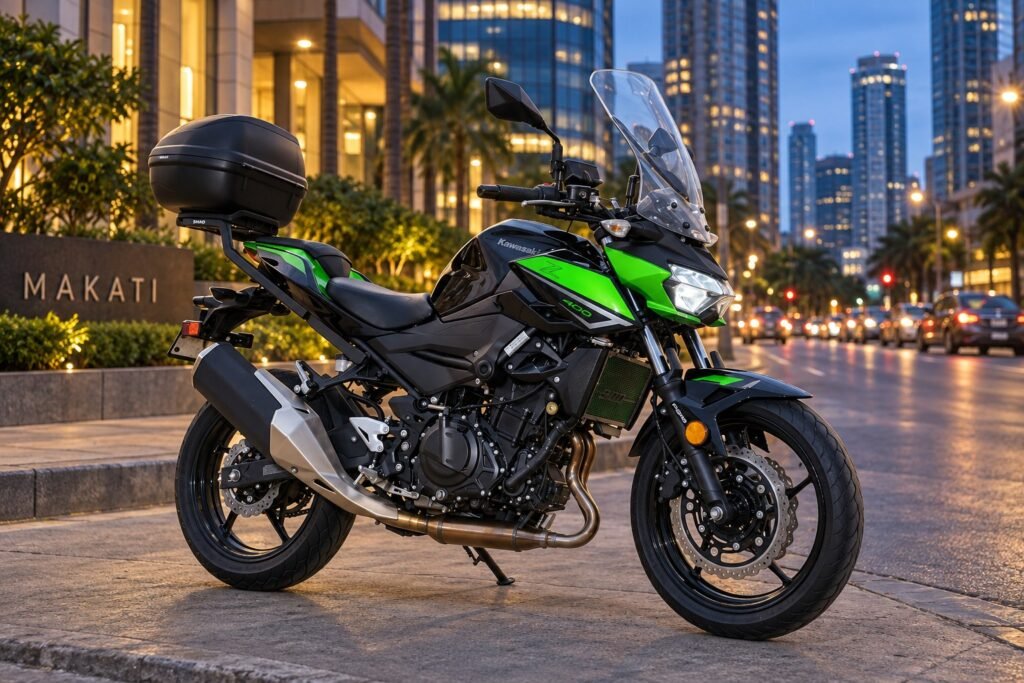
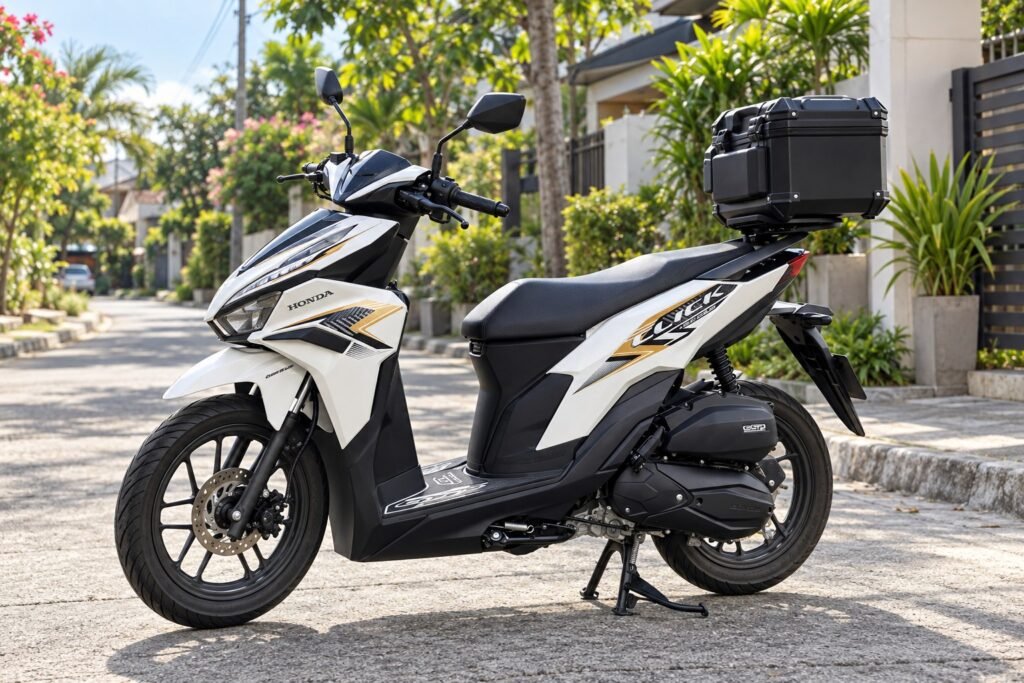
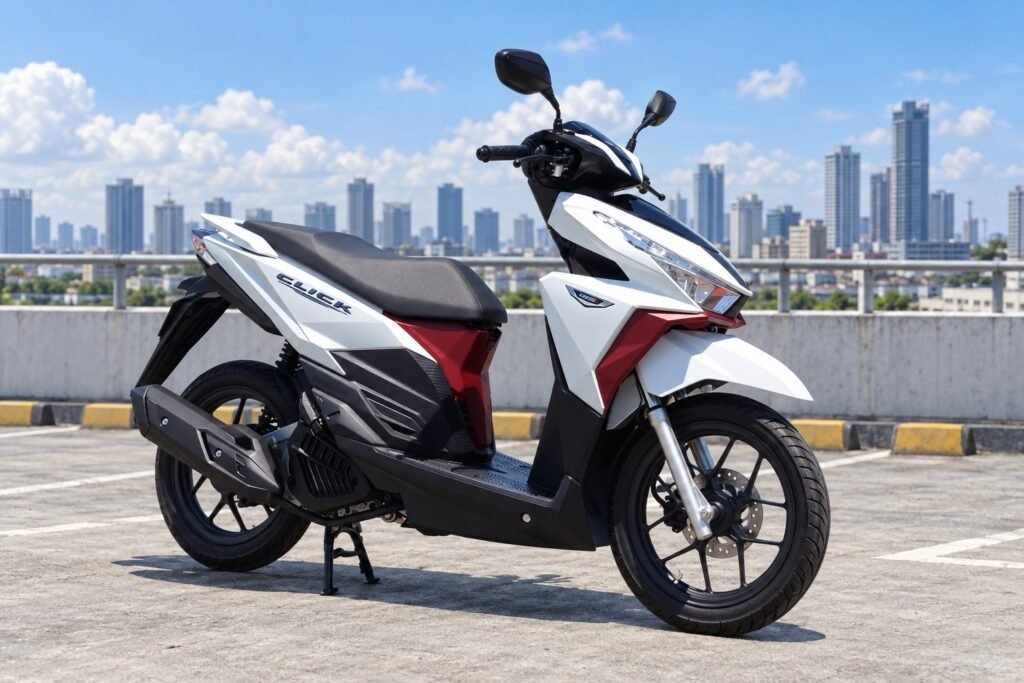
Every bike we rent, from a 125cc Click to the 649cc Vulcan, requires a license that covers motorcycles; the manual bikes also need real clutch experience.
If your license is not in English
Philippine embassies advise that a foreign license not written in English should be accompanied by an official English translation, issued by the issuing country’s embassy in the Philippines. An International Driving Permit does the same job. If your license is in English, neither is legally required inside the 90 days.
The details (where to get an IDP, why it never extends the 90 days, and why some riders carry one anyway) are in our guide to International Driving Permits in the Philippines. The short rule: an IDP is a translation, not a permit, and it is worthless without the original license next to it.
After 90 days: getting a Philippine license
Expats, retirees and long-stay travelers convert their foreign license at the Land Transportation Office. The LTO’s 2025 Citizen’s Charter, as summarized by Top Gear Philippines in October 2025, sets out the process for a non-professional license.
| Who qualifies | Holder of a valid foreign license, physically and mentally fit, able to read and write English, Filipino or a major dialect, with no unsettled traffic violations |
|---|---|
| Visa | Valid for at least 120 days from your date of arrival, or an ACR I-Card if you are a temporary resident |
| Documents | Original and photocopy of your foreign license; official English translation from your embassy if it is not in English; passport (photo page, visa page, latest arrival stamp); medical certificate electronically transmitted by an LTO-accredited clinic; completed application form |
| Exams | None if your foreign license is valid, except a practical test for applicants from countries that drive right-hand-drive vehicles. An expired license means written and practical exams. |
| Fees | ₱585 license fee, ₱100 conversion fee, ₱100 application fee, plus the medical |
| Validity | Five years on first issue |
| Where | LTO licensing centers and district offices; not all handle conversions. In Metro Manila the main office on East Avenue, Quezon City does. |
Practice varies between LTO offices, so check with yours before you go, and start before day 90 rather than after.
A conflict worth knowing about: the same Top Gear guide says foreigners staying beyond 90 days can drive with “a local license or an international driving license” alongside their foreign license. RA 4136 does not say that. Its Section 21 requires a tourist past 90 days to obtain a license under the Act, which is a Philippine license, and an IDP is only a translation of the license you already hold. We follow the statute.
The rules visitors actually get stopped for
These are the rules tourists actually get ticketed for, with first-offense fines.
| Rule | Source | First offense |
|---|---|---|
| No helmet, rider or passenger | RA 10054 | ₱1,500, rising to ₱10,000 and license confiscation by the fourth |
| Helmet without a PS or ICC mark | RA 10054 | From ₱3,000 |
| Not carrying your license, OR or CR | RA 4136 / JAO 01-14 | ₱1,000 |
| No valid license, including past day 90 | JAO 01-14 | ₱3,000 |
| Under-400cc bike on an expressway | DOTC DO 2007-38 | Turned back, or charged with reckless driving (₱2,000) |
| Child passenger who cannot reach the foot pegs | RA 10666 | ₱3,000 |
| Texting, calling or browsing while riding | RA 10913 | ₱5,000 |
Helmets. RA 10054 requires “all motorcycle riders, including drivers and back riders” to wear a standard protective helmet on any road, short trip or long. Only helmets carrying the Philippine Standard (PS) mark or an Import Commodity Clearance (ICC) sticker are legal to sell, and a helmet without one can be treated as no helmet at all. If you bring your own from home, check for the mark before you rely on it. Every Rent2Ride bike comes with one helmet, and a second can be added when you book.
Papers. RA 4136 says the license “shall be carried by the driver at all times”. Officers also ask for the bike’s registration papers (OR/CR); a rental should come with a valid copy.
Expressways. Only motorcycles of 400cc and above may use tolled expressways such as NLEX, SLEX and Skyway, and a 399cc bike does not qualify. Every scooter we rent is under the line. Our guide to the expressway rules covers which bikes qualify and what happens if you are caught.
Passengers and phones. A child may ride only if their feet reach the foot pegs, their arms reach around your waist and they wear a proper helmet. Texting, calling and browsing are banned even at a red light; hands-free use is allowed if the device does not block your view.
One rule you can skip. Motorcycles are exempt from Metro Manila’s expanded number-coding scheme, so the last digit of a rental’s plate does not keep it off the road on weekdays.
Renting: the practical route on a short stay
Nobody sensibly buys, registers and insures a motorcycle for a three-week trip. A rental arrives registered, insured and with its papers. At Rent2Ride Manila every rental includes one helmet, a phone holder, 250 km of riding a day and TPL insurance, which covers other people rather than you or the bike; fuller coverage is available as an optional extra. Fuel is same-to-same.
To rent you need a valid license that covers motorcycles, with a translation or IDP if it is not in English; two valid government-issued IDs, surrendered at pickup; and a refundable deposit of ₱2,000 to ₱5,000 depending on the bike. The full list is on our rental requirements page, and our post on motorcycle rental requirements goes through them in more detail.
If you have not ridden in a city like Manila, start on an automatic scooter: the Honda Click 125 from ₱525 a day, the Click 160 at ₱850, the Yamaha NMAX 155 at ₱950 or the Honda ADV 160 at ₱1,200. Manual riders can choose the Yamaha WR 155, Dominar 400 or Z400 (₱1,200–₱2,200). Only the Kawasaki Vulcan 650S at ₱2,900 is expressway-legal. Our beginner’s guide and scooter-or-motorcycle comparison help with the choice.
We are open daily from 6:00 AM to 11:00 PM at Stall No. 9, Washington Street corner Urban Avenue, Makati. See the full fleet with live prices, or contact us on +63 960 245 4398; WhatsApp is the fastest way to reach us.
Please note: this article is general information, not legal advice. Rules change and enforcement varies between officers and regions. Confirm current requirements with the LTO or your embassy before you ride.
Frequently asked questions
Can tourists ride a motorcycle in the Philippines?
Yes. Under Section 21 of RA 4136, a tourist with a valid license from their own country may drive in the Philippines for up to 90 days from arrival. For a motorcycle, that license must cover motorcycles. If it is not in English, carry an official English translation or an International Driving Permit with it.
Can I ride a scooter in the Philippines on a car license?
No, unless your license also covers motorcycles. Philippine licenses treat motorcycles, automatic scooters included, as a separate category (DL code A) from cars (code B). A scooter having no gears does not change the category, and an IDP cannot add an entitlement your license does not show.
What happens if I ride after my 90 days are up?
You are treated as driving without a valid license. The LTO’s schedule of fines, JAO 01-14, names this case specifically and sets a ₱3,000 fine. To keep riding legally you must convert your foreign license to a Philippine one before day 90.
How does a foreigner convert a license in the Philippines?
At an LTO office that handles conversions, such as the main office on East Avenue, Quezon City. Bring your valid foreign license, an embassy English translation if needed, a passport with a visa valid at least 120 days from arrival (or an ACR I-Card) and an LTO-accredited medical certificate. A valid license needs no exams except a practical test for applicants from right-hand-drive countries. Fees total ₱785 plus the medical.
Do foreigners need to wear a helmet on a motorcycle in the Philippines?
Yes. RA 10054 requires every rider and back rider to wear a standard protective helmet carrying a PS mark or ICC sticker, on every road. The fine starts at ₱1,500 and reaches ₱10,000 plus license confiscation by the fourth offense.
Can a foreigner ride on Philippine expressways?
Only on a motorcycle of 400cc or more. The rule is about the bike, not the rider: it applies to Filipinos and foreigners alike, and every bike up to 399cc, including all the common 125cc–160cc scooters, is barred from tolled expressways.
Sources
Section 21 and Section 19 of Republic Act No. 4136, RA 10054 (helmets), RA 10666 (children on motorcycles) and RA 10913 (distracted driving), all from the Lawphil Project. The 90-day and English-translation guidance from the Philippine embassies in Berne and Buenos Aires. Conversion requirements and fees from Top Gear Philippines, 6 October 2025, summarizing the LTO Citizen’s Charter 2025. DL codes from Top Gear Philippines, 23 February 2022. Fines from DOTC-LTO-LTFRB Joint Administrative Order No. 01-14, as reported by Top Gear Philippines, 5 June 2014. Number-coding exemption from the Daily Tribune, 1 September 2025. All verified 27 October 2026. Rental rates and requirements from our own live pricing and rental pages on the same date.